
A CD often looks simple at the start. The goal stays clear. Safe growth with a fixed return. You choose a rate, lock your money, and wait for maturity. This setup feels easy, but small decisions can change the outcome. The real issue begins with minor choices. These choices seem harmless in the beginning. Over time, they reduce returns or limit access to funds. A small mistake in timing, term, or structure can affect the final result more than expected.
This guide focuses only on those practical mistakes. No theory. No basic explanations. Just real situations that show how small errors can impact your money inside a CD.
Locking Money at the Wrong Time
Timing matters more than most people think. CD rates change with the market. Sometimes they rise quickly. If you lock your money just before a rate increase, you stay stuck with a lower return for the full term. That one decision can reduce your total earnings.
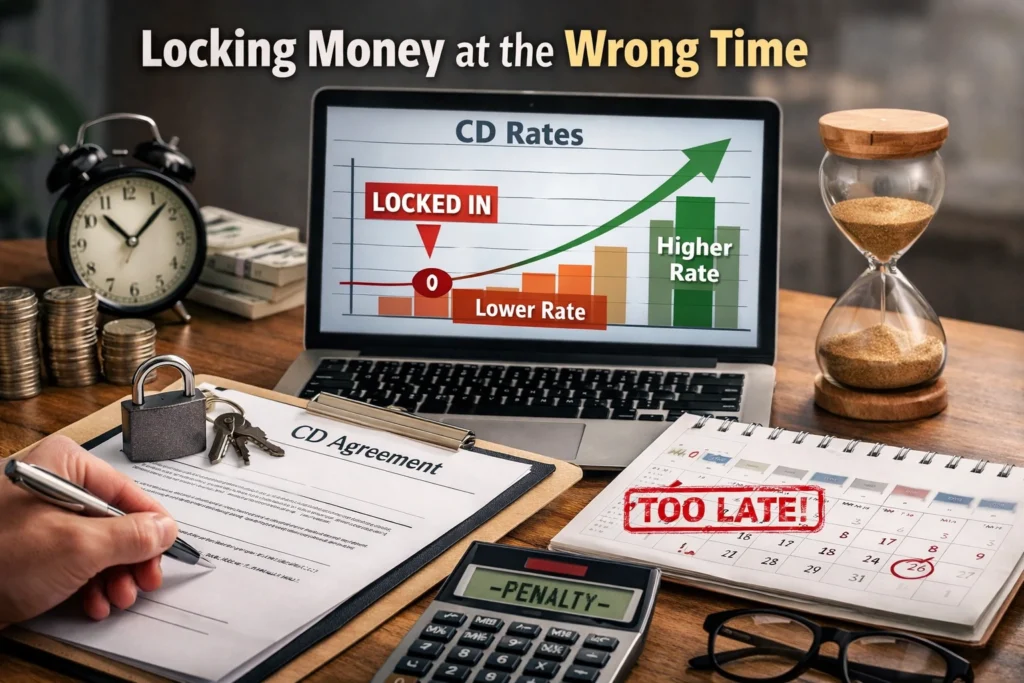
This happens often in uncertain markets. People rush to open a CD because they fear missing out. A few weeks later, rates go up. They cannot switch without a penalty, so they remain locked at a lower rate. A simple check can help. Look at recent rate trends. If rates rise month after month, waiting a little may give a better return. You can also test your decision before you commit.
Choosing the Wrong Term Length
Many people pick a CD term without a clear plan. They choose 1 year or 5 years because it feels standard. This creates a mismatch between their money needs and the CD duration. Short-term CDs often give lower returns, and long-term CDs lock money for too long.
The real problem is not the term itself. The problem is choosing a term that does not match your financial goal. The real problem is not the term itself. The problem is choosing a term that does not match your financial goal. A deeper look at choosing the right CD term based on timing can help you avoid this mistake.
Common term mistakes:
• Select a term based on popularity, not need
• Lock money long-term without a clear goal
• Ignore future cash needs
• Choose highest rate without checking timeline
A simple comparison makes this clear:
| Goal Timeline | Wrong CD Choice | Result |
|---|---|---|
| 12-18 months | 5-year CD | Early withdrawal penalty |
| 3-5 years | 1-year CD | Lower total return |
| Unknown need | Long-term CD | No flexibility |
A better approach stays simple. Match your CD term with your goal timeline. Do not chase the highest rate if it locks your money beyond your need.
Ignoring Early Withdrawal Penalties
This mistake is common. People assume they will not need the money before the CD ends. Real life often changes plans, and access to cash becomes important. A CD does not offer easy withdrawals like a savings account.
Most CDs charge a penalty if you withdraw early. This penalty can remove months of interest. In some cases, it also cuts into your original deposit, which turns profit into loss. A simple example shows the impact. You invest $5,000 and earn $200 interest. An early withdrawal penalty of $250 leaves you with a $50 loss. Always check penalty rules before opening a CD.
Chasing the Highest Rate Only

A higher rate looks attractive. Many people focus only on that number and stop their research at that point. It feels like the easiest way to get better returns. This quick decision often leads to hidden problems later. This approach can lead to poor choices. Some high-rate CDs come with strict rules. Others may limit access or offer less flexibility. A few also lock your money for longer than you expect, which creates issues if your plans change.
High rates do not always mean better outcomes. Terms, penalties, and flexibility matter just as much. A clear breakdown of APY vs APR helps you understand real CD earnings and avoid confusion. The best CD is not always the one with the highest rate. It is the one that fits your financial needs and timeline. Balance matters more than numbers when you want safe and steady returns.
Forgetting About Inflation Impact
A CD gives fixed returns, but inflation does not stay fixed. If inflation rises faster than your CD rate, your real earning drops. You may see growth in your account, but your money buys less over time. This mistake often goes unnoticed. People focus on the interest they earn and assume everything works well. A simple check can help. Compare your CD rate with current inflation trends. If the gap is small, consider shorter terms or more flexible options.
Not Comparing CD vs High-Yield Savings
Many people skip this comparison and assume a CD is always the better option. That is not always true. High-yield savings accounts can offer similar returns with more flexibility. When the rate gap is small, access to your money becomes more valuable than locking it.
| Factor | CD (Certificate of Deposit) | High-Yield Savings Account |
|---|---|---|
| Rate | Fixed rate for full term | Variable rate, can change |
| Flexibility | Locked for set period | Withdraw anytime |
| Penalties | Early withdrawal penalty | No penalty |
| Access to Money | Limited access | Full access |
| Best Use | Fixed savings goal | Emergency or flexible savings |
| In Rising Rates | Can miss better future rates | Adjusts with market rates |
Missing Out on CD Laddering
A single CD feels simple, but it limits your options. When all your money sits in one CD, you lose flexibility. You cannot access funds without a penalty, and you cannot take advantage of better rates if they appear later.

CD laddering solves this problem. You split your money into multiple CDs with different maturity dates. This structure spreads your risk and gives you more control over your funds without breaking your investment plan. This approach offers clear benefits. You get better average rates over time, and part of your money becomes available at regular intervals. Many people ignore this strategy and lock everything in one CD, which reduces flexibility and limits growth opportunities.
Overlooking Special CD Offers
Banks often release short-term promotional CDs with higher rates. These offers stay available for a limited time and can give better returns than standard CDs. Many people miss them because they do not track rate changes or check updates regularly. As a result, they lock money into average rates and lose better opportunities.
This is where tracking makes a difference. Instead of guessing, you can compare current offers and see how they perform over time. Small differences in promotional rates can lead to noticeable gains, especially on larger deposits or longer terms. A deeper review of returns and structures can help you understand the real impact of these offers. It allows you to compare different CD choices and make smarter decisions based on actual numbers instead of assumptions.
Trusting One Bank Only
Some people stick to one bank because they trust it. They feel comfortable and avoid checking other options. This habit limits their choices and keeps them from seeing better opportunities in the market.
Rates vary between banks, even for the same term length. A small difference in rate can grow into a noticeable gain over time. Checking multiple banks takes only a few minutes, but it can improve your return without adding any extra risk.
Ignoring Monthly vs Daily Compounding
Compounding frequency affects your final return more than most people expect. The difference may look small at the start, but it grows over time. Many people focus only on the interest rate and ignore how often that interest compounds. If two CDs offer the same rate, the one with more frequent compounding will give a better result.
A closer look at how daily compounding affects CD returns can help you understand the real difference.
| Compounding Type | Frequency | Impact on Return |
|---|---|---|
| Daily | 365 times per year | Highest return over time |
| Monthly | 12 times per year | Moderate return |
| Quarterly | 4 times per year | Lower return compared to others |
Real Example Small Mistake, Big Impact
Let’s take a simple example. Two people invest $10,000 in a CD. Person A locks into a 3-year CD at 5%. Person B waits two months and then locks at 5.5%. Both make a small choice, but the outcome changes over time.

That half percent difference may look small at first. Over a few years, it adds up and gives Person B a higher return. The gap becomes more noticeable as time passes, even though both started with the same amount. Now add compounding differences and possible penalties into the mix. The gap grows even wider. This shows one clear point. Small choices in timing, rate, and structure can lead to big differences in final results.
CD Mistakes People Ask About
Many people search terms like “CD mistakes calculator” or “CD vs high-yield savings.” These questions come from real confusion. Some also look at bank-specific rates like NexBank CD rates. That shows one thing. People want better returns, but they often skip the details.
Others search for seasonal mistakes. Terms like “CD account savings mistakes July August” reflect timing concerns. That connects back to rate trends and decision timing. These questions all point to the same idea. CDs look simple, but small details matter.
Smart Decisions Make Better Returns
A CD works best when you treat it like a strategy, not a quick decision. It may look simple, but small choices shape your final outcome more than expected. Rates, timing, term length, and flexibility all play a role. If you ignore even one of these, your returns can drop without clear warning. Each factor connects with the other, so balance matters.
Most mistakes do not come from big errors. They come from small details that people overlook. These details often feel unimportant at the start but create real impact over time. Pay attention to these small factors before you lock your money. A careful approach helps you protect your returns and make better financial decisions.