Cold mornings can surprise cyclists. A tire that felt perfect yesterday may feel soft today. Nothing changed in the bike itself. Air temperature did.
Air inside a tire expands when it warms and contracts when it cools. A small temperature shift can move tire pressure several PSI. Riders often overlook this detail.
The result can affect grip, speed, and comfort. Many cyclists now rely on a tire pressure change with temperature calculator to adjust PSI before a ride.
If you want to test real values, you can check this practical bike tyre pressure adjustment calculator which shows how PSI changes based on riding conditions.
Understanding the relationship between temperature and pressure helps riders maintain consistent performance on the road.
Why Temperature Changes Tire Pressure
Air behaves in a predictable way. When temperature increases, air molecules move faster and expand. Pressure rises inside the tire.
When temperature drops, air contracts. Pressure falls. Cyclists often see this pattern during seasonal changes. A road bike inflated to 90 PSI at 20°C (68°F) may drop close to 86 PSI at 10°C (50°F) overnight.
The difference seems small, yet it changes ride feel. Lower pressure increases rolling resistance. Higher pressure reduces comfort and grip.
Professional riders check PSI before every ride. Temperature plays a major role in that routine.
What a Tire Pressure Temperature Calculator Actually Does
A temperature calculator estimates PSI shifts based on the starting pressure and the temperature difference. The concept comes from basic gas laws that connect pressure with temperature.
The rider simply enters:
Current tire pressure
Current temperature
Expected riding temperature
The calculator predicts the new pressure level. This helps riders inflate tires correctly before the ride starts.
Many riders now keep a mobile tire pressure temperature calculator app on their phone. The idea stays the same. The tool simply speeds up the calculation.
Road bike tires run at higher PSI than gravel bikes, which makes small changes easier to notice during a ride. Rider weight also plays a major role in tire pressure selection. This detailed guide explains how rider weight changes road bike tyre pressure and why heavier riders often need higher PSI.
Small Temperature Changes Still Matter
Small temperature changes can reduce bike tire pressure before a ride.
Many riders assume large weather swings cause pressure changes. Reality looks different. Even a 5-10°C change affects tire pressure.
A typical example:
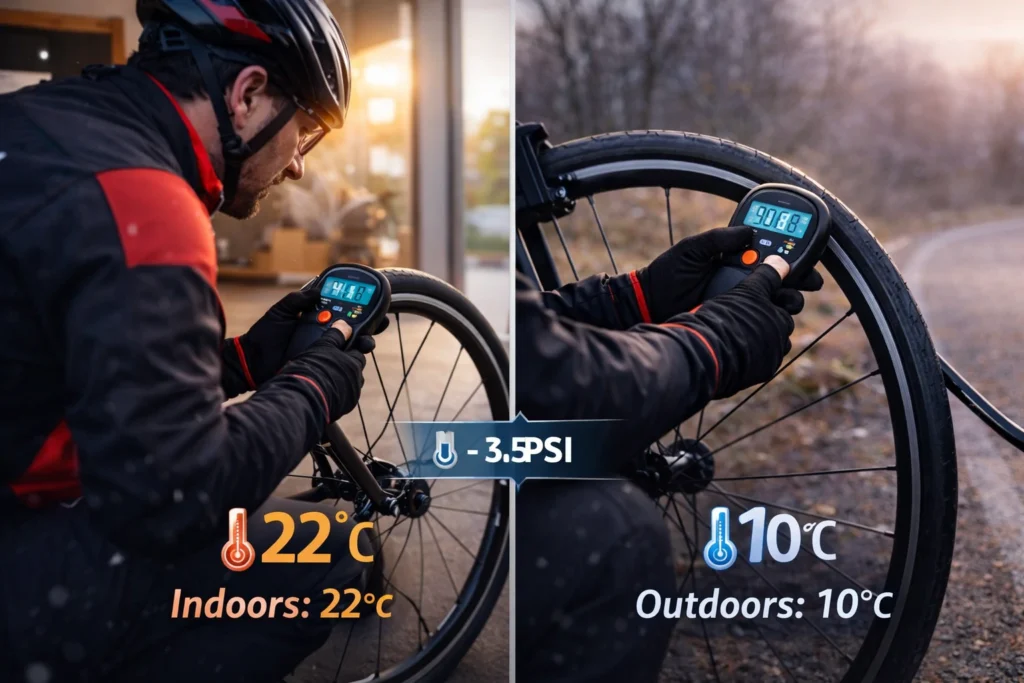
A rider inflates tires indoors at 22°C. The ride begins outdoors at 10°C. Pressure can drop around 3-4 PSI. That drop affects handling during fast turns and braking.
Professional cycling teams measure tire pressure outdoors right before races. The step ensures the PSI reflects actual riding temperature.
Temperature Can Lower Road Bike PSI Before a Ride
A simple situation shows how temperature affects tire pressure. A rider inflates road bike tires to 85 PSI inside a garage where the air temperature is about 21°C. The bike then moves outside where the temperature is only 9°C.
The cooler air reduces pressure slightly, and the tires settle around 81-82 PSI. The difference seems small, yet many cyclists feel the change during the ride. A quick pressure check or a temperature calculator helps riders adjust PSI and keep the bike performing as expected.
Real Ride Test:
During a cool morning ride, a road bike tire inflated to 85 PSI indoors dropped to about 82 PSI after sitting outside for a few minutes in colder air. The difference felt small at first, but acceleration and cornering felt slightly softer. A quick pressure adjustment restored the expected ride feel.
Tire Pressure vs Temperature Chart
Some riders prefer visual references instead of calculations. A basic tire pressure vs temperature chart shows approximate PSI shifts.
Example pattern:
Temperature Drop
PSI Change
5°C drop
~1 PSI
10°C drop
~2 PSI
20°C drop
~4 PSI
These numbers vary depending on tire size and initial pressure. Charts provide a quick estimate. Calculators offer better accuracy. Many riders combine both methods. The chart helps them understand the trend. The calculator gives precise numbers.
Road Bikes Feel Pressure Changes Faster
Road bike tires run at higher PSI than gravel or endurance bikes. This higher pressure makes small changes easier to notice during a ride. Even a few PSI difference can affect speed and handling, so road cyclists often monitor pressure more closely when temperature changes.
Factor
Road Bike Tires
Gravel / Endurance Tires
Typical Pressure Range
70–100 PSI
50–70 PSI
Sensitivity to Temperature
High pressure amplifies small changes
Lower pressure reduces noticeable variation
Effect of 3 PSI Drop
Can noticeably change ride feel and speed
Usually less noticeable during riding
Ride Quality Impact
Handling and rolling speed may change
Comfort remains more stable
Why Adjustment Matters
Road cyclists monitor temperature closely
Adjustments matter but feel less critical
Calculator Inputs
Rider weight, tire width, temperature
Tire width, terrain, temperature
MTB Tire Pressure and Temperature
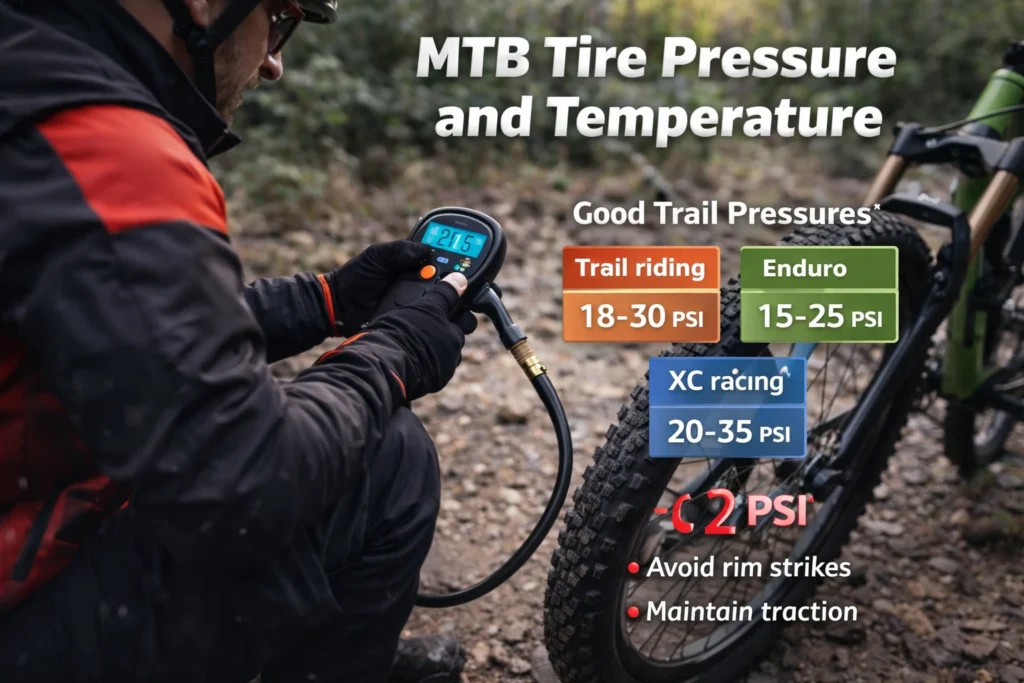
Checking MTB tire pressure before hitting technical trails.
Mountain bike tires use much lower PSI.
Typical range:
18-30 PSI for trail riding
15-25 PSI for enduro
20-35 PSI for XC racing
Low pressure reduces the effect of temperature changes. A 2 PSI drop still matters though. It can increase tire squirm on corners.
Many riders rely on an MTB tire pressure calculator to fine-tune pressure before technical trails. The calculation helps riders avoid rim strikes or loss of traction.
How Cycling Apps Handle Pressure Calculations
Many cyclists prefer mobile tools over manual charts. Abike tire pressure calculator app usually includes several inputs:
Rider weight
Tire width
Rim type
Riding surface
Temperature
The software produces a recommended PSI range.
Some advanced tools adjust pressure based on real weather data. The rider enters location and ride time. The app estimates temperature shifts automatically.
Professional wheel brands also offer tools. Riders sometimes compare numbers from systems like the Zipp tire pressure calculator to verify results. Most calculators rely on similar physics. Differences appear in the added riding factors.
Long rides often start early in the morning when the air feels cool. As the day moves forward, the temperature slowly rises. This change causes tire pressure to increase little by little during the ride.
A tire that begins slightly lower in PSI can reach a better pressure once the road and air become warmer. Riders who start with the highest PSI may notice a harsh ride later as pressure climbs.
This situation appears often during summer rides. Many experienced cyclists adjust PSI based on the expected temperature during the main part of the ride. A reliable bicycle tyre pressure calculator helps riders make that choice with more confidence.
Best Way to Check Tire Pressure Before a Ride
Consistency matters more than perfection when it comes to tire pressure. Riders who follow the same routine before every ride usually get more predictable results. Temperature, storage conditions, and road surfaces can slightly change PSI, so a quick check helps keep performance steady.
Many cyclists check tire pressure outdoors so the reading matches the real riding temperature. Tires inflated inside a warm room may show lower PSI once the bike moves outside into cooler air. Riders often inflate tires close to the temperature they expect during the ride.
A small adjustment may help if the day will become warmer later. Some riders also use a calculator when weather changes quickly. This habit helps keep tire feel consistent and improves control on the road.
Quick Rider Tip:
Check tire pressure outside if possible. Indoor air can be warmer than outdoor conditions, which may cause a small PSI drop once the bike moves outside.
Quick Tip Many Cyclists Miss
Tire pressure can change even when the bike does not move. A bike that stays in a warm house overnight may show lower PSI once it moves outside into colder air. Temperature alone can cause the pressure drop.
The opposite situation can happen after a cold ride. Tires may feel firmer once the bike returns indoors where the air is warmer. These shifts often confuse new cyclists because the tire seems to change without any air loss.
A simple temperature calculation removes the guesswork. Many riders adjust pressure based on outside temperature before every ride. The process takes less than a minute and helps the bike feel consistent on the road