
When riders compare Silca vs SRAM tire pressure calculator, they usually expect one clear winner. That rarely happens. You enter 75 kg, select 25 mm tires, choose tubeless, and both tools return slightly different PSI. On paper, the gap looks minor. On the road, it changes how the bike corners, how it absorbs vibration, and how stable it feels under power. Small numbers create noticeable ride differences.
Accuracy does not come from brand reputation. It comes from what the calculator actually measures. If a tool focuses mainly on weight and width, the result stays limited. If it also considers surface type, rim width, temperature, and weight balance, the output becomes more realistic. The smarter question is not which logo is better. The better question is which logic matches how you actually ride
What Silca and SRAM Actually Adjust
Silca builds its pressure around casing behavior and rolling efficiency. It often suggests slightly lower PSI because it trusts modern tubeless tires and wider rims. The goal is smoother rolling and better road feel. SRAM usually sits a bit higher. It adds a small safety margin to improve stability and reduce the risk of rim strikes.
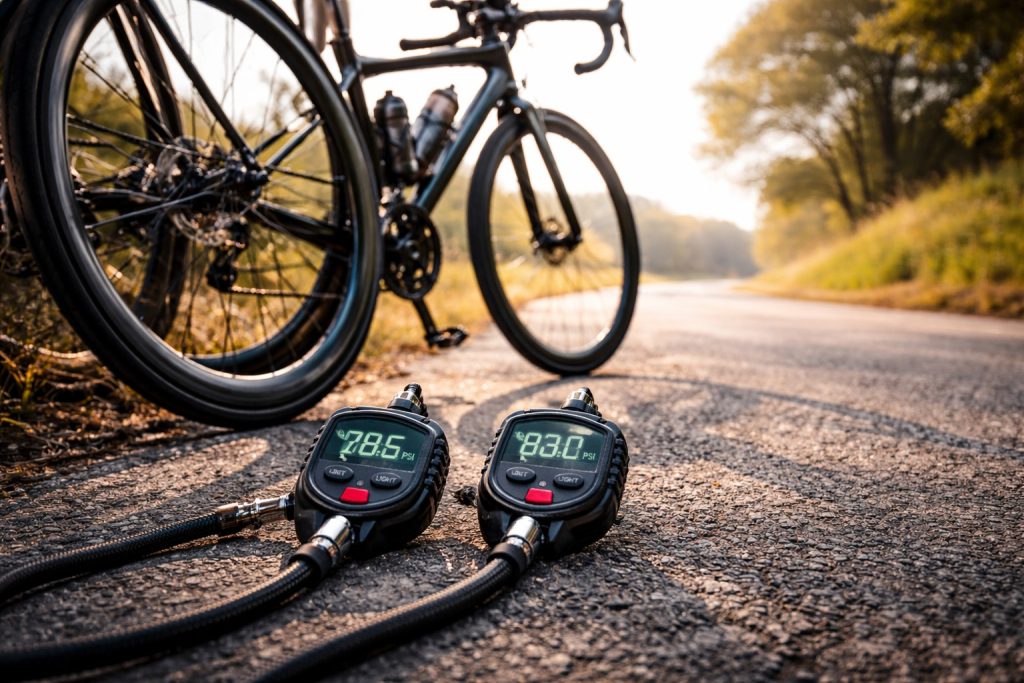
Both tools rely mainly on total rider weight, tire width, and front-rear balance. That forms the base of their calculation. The real difference shows in how they handle surface roughness and safety limits. One leans toward performance feel. The other leans toward control and protection.
Now compare that with a system that also asks for rim internal width, temperature, rider preference, load type, and front weight distribution. When more real riding factors enter the formula, the final PSI becomes more precise. A wider input structure often leads to a pressure number that matches real conditions more closely.
Real Setup Comparison
Let’s walk through a real setup using the same configuration shown inside the tool. This helps you see how small input changes affect final PSI.
Step 1: Enter Core Details
- Total system weight: 75 kg
- Front tire width: 25 mm
- Rear tire width: 25 mm
- Wheel size: 700c
- Bike category: Road Race
These inputs create the base pressure range.
Step 2: Define Riding Conditions
- Surface: Smooth Asphalt
- Tire setup: Tubeless
- Rim type: Hooked
- Rim internal width: 21 mm
- Temperature: 20°C
This step adjusts pressure based on real-world riding conditions.
Step 3: Fine-Tune Rider Factors
- Rider preference: Balanced
- Load type: Solo
- Front weight distribution: 47.5%
Now the calculation reflects how weight actually sits on the bike.
With this setup, Silca may suggest slightly lower rear pressure based on casing behavior. SRAM may add a few PSI for extra stability. When rim internal width and front weight distribution enter the equation, pressure shifts again. That shift makes the result more realistic.
If you want to test your own setup values, you can also run them inside an advanced tire pressure calculator that allows surface, rim width, and rider preference adjustments.
It allows you to adjust surface, rim width, and rider preference instead of relying only on weight.
Why Riders Compare on Reddit
Search silca vs sram tire pressure calculator reddit and clear patterns appear. Some riders say Silca feels smoother and faster on clean pavement. Others say SRAM feels firmer and more controlled in corners. Most riders try both tools, ride a few kilometers, then adjust PSI on their own.
The real issue often hides in the details. Many riders never change front weight distribution. Few adjust for temperature. Almost none enter rim internal width into the equation.
Two riders may share the same body weight, yet their bikes behave differently because their setups are not identical.
Pressure accuracy improves when the calculation reflects real riding conditions, not just weight and tire size.
MTB Scenario: Where the Gap Widens
When riders search silca vs sram tire pressure calculator mtb, the debate becomes more serious. MTB riding exposes small mistakes quickly. Grip, control, and rim safety depend heavily on correct PSI. A pressure that feels fine on the road can feel unstable on rocky trails.
Surface conditions also change pressure needs. This Tire Pressure Guide for Different Road and Trail Surfaces explains how pavement, gravel, and trails affect PSI choice.
Lower pressure improves grip.
Too low risks rim damage.
Silca often leans lower to improve traction and trail comfort. SRAM usually keeps numbers slightly higher to protect rims and reduce sidewall collapse. The difference becomes more noticeable off-road than on smooth asphalt.
Now add advanced factors:
- Trail roughness
- Tubeless setup strength
- Rim hook design
- Load type
- Rider preference
A proper MTB tire pressure calculator must adjust safe ranges based on riding category. Road Race settings should not share the same pressure window as MTB Trail setups. A category-based system handles this inside one interface, instead of forcing riders to switch between separate tools.
How It Compares With Zipp and Vittoria
Zipp tire pressure calculator often follows wheel system logic and works best within Zipp rim standards. Vittoria tire pressure calculator focuses more on tire casing structure and race feel.
Silca feels closer to Vittoria in approach, with emphasis on rolling efficiency. SRAM aligns more with Zipp’s stability mindset. All brand tools reflect their own testing priorities. A neutral system focuses on riding conditions and setup variables instead of product alignment.
Temperature and Rim Width: Two Overlooked Factors
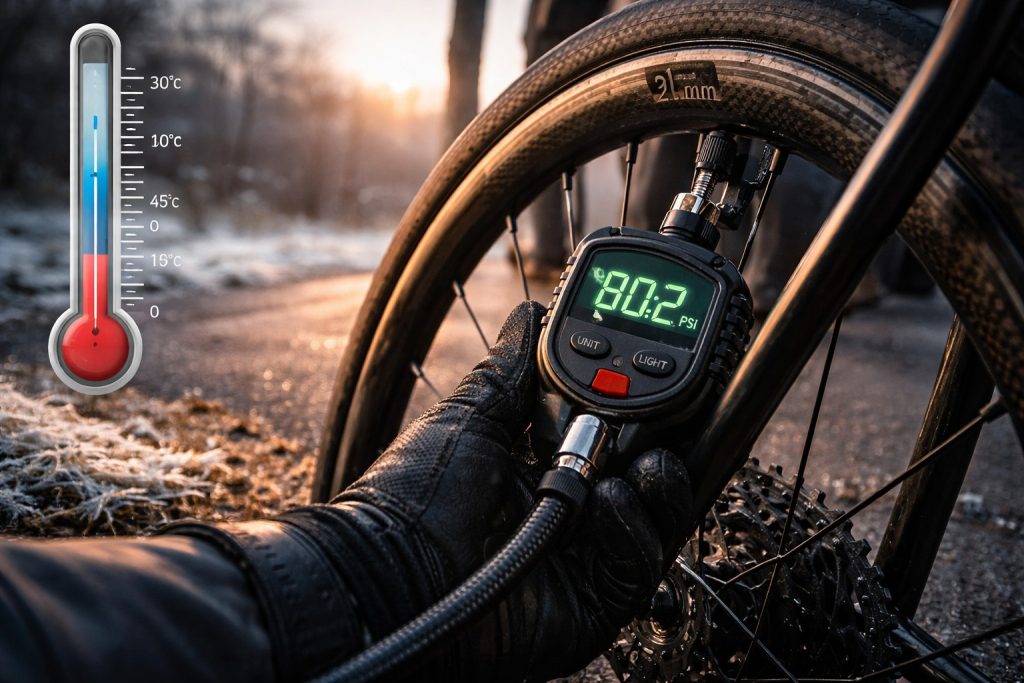
Temperature quietly changes everything. Air expands in heat and tightens in cold. A tire filled at 20°C will not behave the same at 5°C. Pressure can drop several PSI without you noticing. Many riders blame the calculator, but the real cause is simple air physics.
Rim internal width also plays a big role. A 21 mm rim holds a 25 mm tire differently than a 17 mm rim. The tire shape changes. Sidewall support changes.
That directly affects how much pressure the tire actually needs. When temperature and rim width enter the calculation, the result feels closer to real riding conditions.
Is Weight Alone Enough?
Many riders search terms like tire pressure calculator bike or tyre pressure calculator road bike and land on simple weight-based tools. Weight matters. It gives a starting point. It does not tell the full story.
A deeper explanation appears in this Road Bike Tyre Pressure Guide: What Really Affects PSI, which explains the key factors that influence correct PSI on modern road bikes.
A 75 kg rider on 25 mm tires needs different PSI than the same rider on 32 mm tires. Add saddle bags and the rear wheel carries more load. Change riding posture and the front wheel takes more pressure. An aggressive race position loads the front more than a relaxed endurance setup.
Pressure becomes more accurate when tire width, load type, and weight distribution enter the calculation. Weight starts the process. Real riding details finish it.
So, Which One Is More Accurate?
The answer depends on how you ride and how your bike is set up.
Silca often feels more precise for riders who focus on comfort and rolling efficiency on smooth roads. SRAM feels safer for riders who prefer firm handling and extra rim protection. Both tools offer solid starting points, but neither one knows your exact setup or riding style.
Accuracy improves when more real-world factors enter the calculation, such as:
- Rim width
- Surface type
- Temperature
- Load type
- Rider preference
- Front weight distribution
Pressure is not a fixed number. It sits within a safe tuning range. The more realistic your inputs, the closer the result matches real riding conditions. Use brand calculators as a base. Then fine-tune with a more detailed system. Adjust two PSI at a time and test on familiar roads. In the end, the road gives the final answer.