
Many cyclists check the Silca tire pressure calculator before a ride. They expect a clear PSI number that works on every road. The idea sounds simple. Real riding conditions rarely behave in such a simple way. Pressure calculators help riders avoid obvious mistakes. Too much pressure can cause harsh vibration. Too little pressure increases rolling resistance and can damage rims on rough roads.
Silca gained popularity because it uses physics instead of old cycling myths. The tool studies rider weight, tire width, and road surface. Those variables produce a pressure estimate that often feels more realistic than old rules.
Many riders still compare results with another reference. Some cyclists check numbers through a road bike tire pressure calculator tool and look at the differences. Small PSI changes can alter ride comfort and corner grip.
How the Silca Tire Pressure Model Actually Works
Silca bases its system on tire drop. Tire drop describes how much the tire compresses under rider weight. Engineers believe a certain level of compression creates the best rolling efficiency. Instead of a single pressure value, the calculator evaluates several inputs.
Typical inputs include:
- Rider weight
- Bike weight
- Tire width
- Wheel type
- Road surface quality
- Tubeless or tube setup
The calculator then estimates separate PSI values for front and rear tires. Rear tires carry more load because of rider weight distribution.
Example Pressure Result
| Setup Factor | Example Value |
|---|---|
| Rider Weight | 75 kg |
| Tire Width | 28 mm |
| Wheel Type | Tubeless road wheel |
| Recommended Front Pressure | ~72 PSI |
| Recommended Rear Pressure | ~75 PSI |
Numbers like these work as a starting point. Riders often adjust pressure after a few rides.
Some riders test multiple tools before choosing a pressure range. Silca and SRAM often show slightly different numbers. A real comparison appears in Silca vs SRAM Tire Pressure Calculator: Real-World Accuracy Test.
Vittoria, SRAM, and Zipp Tire Pressure Calculators
Cyclists often compare multiple tools. Each calculator relies on a slightly different model. The most common alternatives appear in rider discussions.
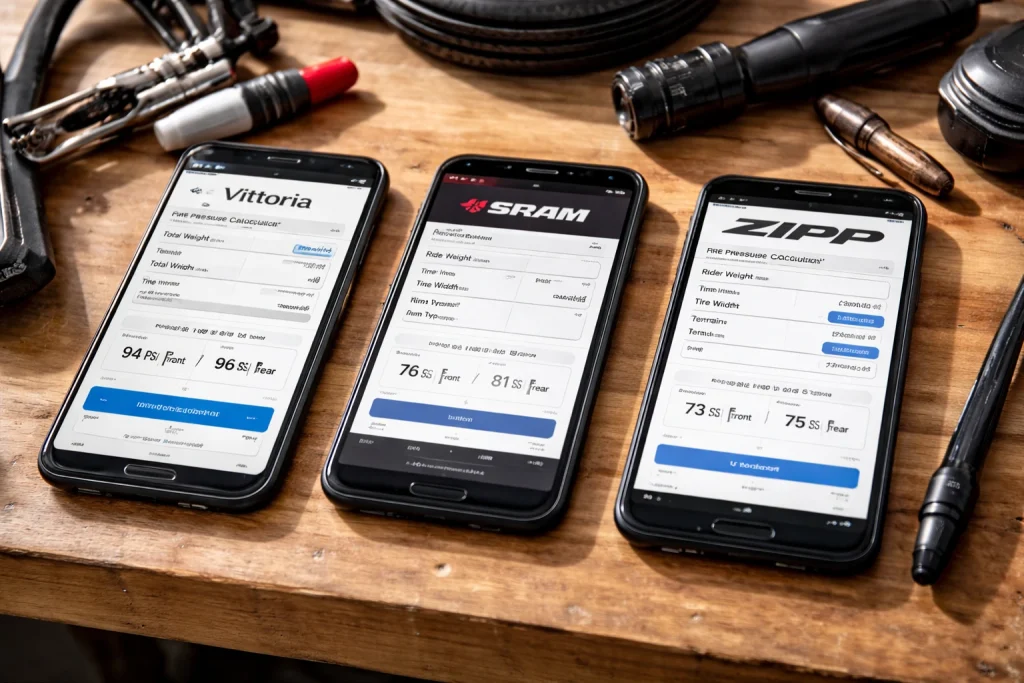
| Calculator | Main Approach | Typical Pressure Style |
|---|---|---|
| Vittoria tire pressure calculator | Uses tire casing design and rim width | Often close to Silca results |
| SRAM tire pressure calculator | Based on racing data and pro setups | Sometimes slightly higher PSI |
| Zipp tire pressure calculator | Focus on wheel aerodynamics and rim width | Can vary with modern wide rims |
These differences explain why riders rarely see identical PSI numbers across tools.
Silca Tire Pressure Calculator App
Many cyclists search for a Silca tire pressure calculator app. Mobile access makes the process easier before a ride. The app version usually offers quick controls and adjustable inputs.
Typical app features include:
- Weight slider adjustment
- Tire width selection
- Surface type option
- Tubeless or tube choice
Riders often check pressure again after they change wheels or tires. Mobile access helps them adjust quickly.
Rider weight plays a major role in pressure calculations. Heavier riders need higher PSI to support the load. This concept becomes clearer in a guide on How Rider Weight Changes Road Bike Tyre Pressur
Road Bike Pressure vs MTB Tire Pressure Calculators
Road cycling pressure rules differ from mountain bike setups. Road tires operate under higher pressure and smaller tire volume. Mountain bike tires behave very differently on dirt or rocks.
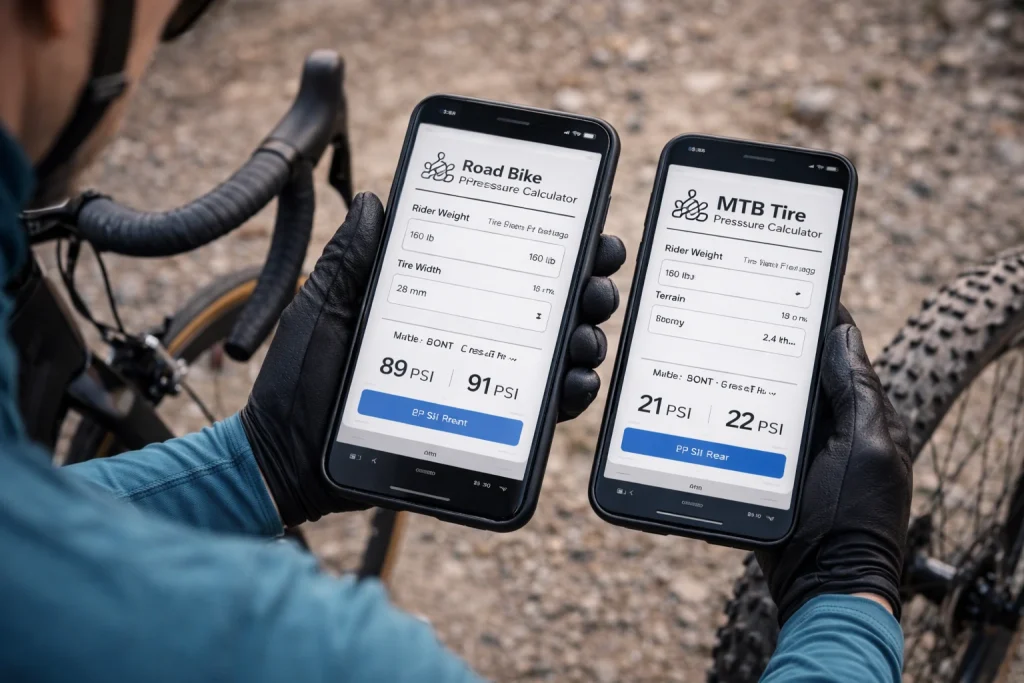
| Bike Type | Tire Width | Typical Pressure Range |
|---|---|---|
| Road Bike | 25–32 mm | Higher PSI |
| Gravel Bike | 35–50 mm | Medium PSI |
| Mountain Bike | 2.0–2.5 inches | Lower PSI |
A dedicated MTB tire pressure calculator often considers terrain such as loose dirt or rocky trails. Road models rarely account for those surfaces.
Road conditions also change the recommended PSI. Rough pavement, gravel roads, and smooth asphalt all affect how tires behave. A detailed Tire Pressure Guide for Different Road and Trail Surfaces explains how terrain changes ideal pressure.
What Happens When the Silca Tire Pressure Calculator Stops Working
Cyclists sometimes search for Silca tire pressure calculator not working. The issue usually relates to browser behavior rather than the formula itself.
Several simple causes appear often:
- Browser script blocking
- Old cached data
- Incorrect tire width input
- Unsupported mobile browser
A quick page refresh often solves the problem. Clearing browser cache also helps when the interface fails to load properly.
Some riders keep another calculator as backup in case the tool stops responding.
Does Tire Pressure Affect Average Speed?
Search trends show a common question: SILCA tire pressure calculator average speed. The calculator does not predict speed directly. It estimates pressure that reduces rolling resistance and vibration loss.
Pressure influences how efficiently a tire rolls over imperfect roads.
| Pressure Condition | Ride Result |
|---|---|
| Pressure too high | Tire bounces on rough pavement |
| Pressure too low | Tire deforms too much and slows down |
| Balanced pressure | Best mix of comfort and efficiency |
Professional cycling teams test pressure carefully because small differences can affect long race stages.
Practical Example From Real Road Riding
A rider weighs 75 kg and uses 28 mm tubeless tires on rough pavement. The Silca calculator may suggest around 72 PSI front and 75 PSI rear. After two rides, the rider may reduce pressure slightly.
A small adjustment often works best:
- Front tire reduced to 69 PSI
- Rear tire reduced to 72 PSI
Comfort improves on rough asphalt. Corner grip also increases. Many riders confirm adjustments through a detailed road surface pressure guide that explains how pavement quality changes PSI recommendations.
When Riders Should Adjust Calculator Results
Pressure calculators offer a useful starting point. Riders still adjust numbers depending on real conditions.
Common reasons for pressure adjustments include:
- Rough road surfaces
- Wide rims
- Tire casing flexibility
- Long endurance rides
Testing pressure during several rides usually reveals the most comfortable range. The Silca model gives a strong baseline. Real road feedback still decides the final PSI.
Pressure depends on several factors beyond rider weight. Tire casing, rim width, and road texture also matter. A deeper explanation appears in Road Bike Tyre Pressure Guide: What Really Affects PSI.