
Most riders talk about speed, gears, and wheels. Few talk about tyre pressure with the same energy. Yet two or three PSI can change how your bike feels more than a new cassette ever will. Road bike tyre pressure depends on three main factors: total weight, tyre width, and road surface. Small PSI changes can affect grip, comfort, and rolling feel.
Pressure affects grip. It affects comfort. It even affects how tired your legs feel after a long ride. Many riders pump tyres to a number they heard years ago and never question it again. That habit works until road, weight, or tyre width changes. This guide explains how to find the right pressure using real setup inputs and practical examples.
What Is Road Bike Tyre Pressure?
Road bike tyre pressure is the amount of air inside the tyre measured in PSI. It controls grip, comfort, and rolling efficiency. Correct pressure depends on rider weight, tyre width, and surface type.
Start With Weight, Not Guesswork
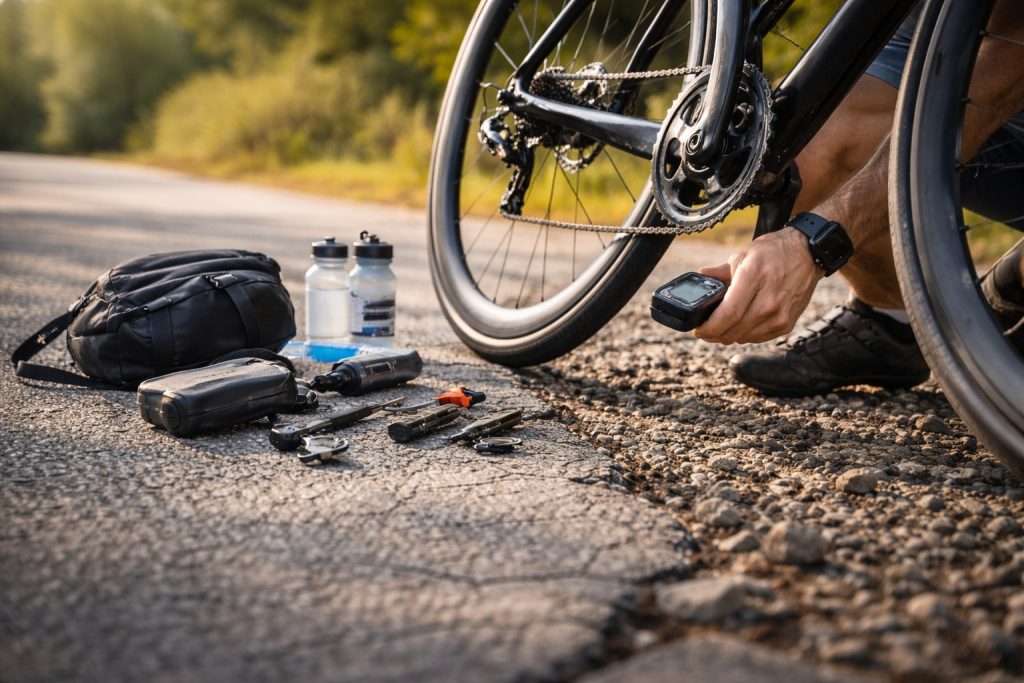
Your total system weight matters more than most riders admit. This includes your body, bike, shoes, bottles, tools, and any extra gear. The tyre does not care what portion comes from you or the frame. It supports the full load.
Heavier systems need more pressure. Lighter systems need less. That part sounds simple. The problem starts when riders stop there.
If you want a deeper breakdown of how rider weight changes front and rear PSI in real numbers, read this guide on road bike tyre pressure by rider weight.
A 75 kg rider on a light road bike does not need the same PSI as a 95 kg rider on deep carbon wheels. The contact patch changes. Rim support changes. The way the tyre deforms under load changes.
If you want a realistic starting point, check your pressure with this tyre pressure calculator. It adjusts the baseline using total riding weight instead of guesswork. That gives you a safer place to start before you fine tune on the road.
Rear pressure usually sits higher than front. The reason is weight distribution. Most road bikes carry more load over the rear wheel. That extra load needs extra support. If both tyres sit at the same PSI, the rear can feel soft and unstable under hard effort.
Tyre Width Changes Everything
Two riders can weigh the same and still need different pressure. Tyre width explains why.
A 25 mm tyre holds less air volume than a 28 mm tyre. A 32 mm tyre holds even more. More volume means the tyre can support weight at lower pressure without bottoming out. This is why wider tyres often feel smoother. They run lower PSI but still protect the rim. Lower pressure increases the contact patch. That improves grip on rough roads.
Riders who move from 25 mm to 28 mm often keep the same old PSI. The bike then feels harsh. The wider tyre loses its main benefit. Consider a simple example. A rider at 80 kg might run mid 80s PSI on 25 mm tyres. On 28 mm tyres, that number often drops several PSI. On 32 mm tyres, it drops again. Exact numbers depend on setup and surface, but the trend stays consistent.
Width also works with rim internal width. Modern rims are wider than older models. A wider rim supports the tyre sidewall better. That can allow slightly lower pressure without risk. If you are unsure how width changes your numbers, enter your tyre width and calculate PSI using your full setup. That avoids copying numbers from riders who use different equipment.
Road Surface Is Not Just a Detail
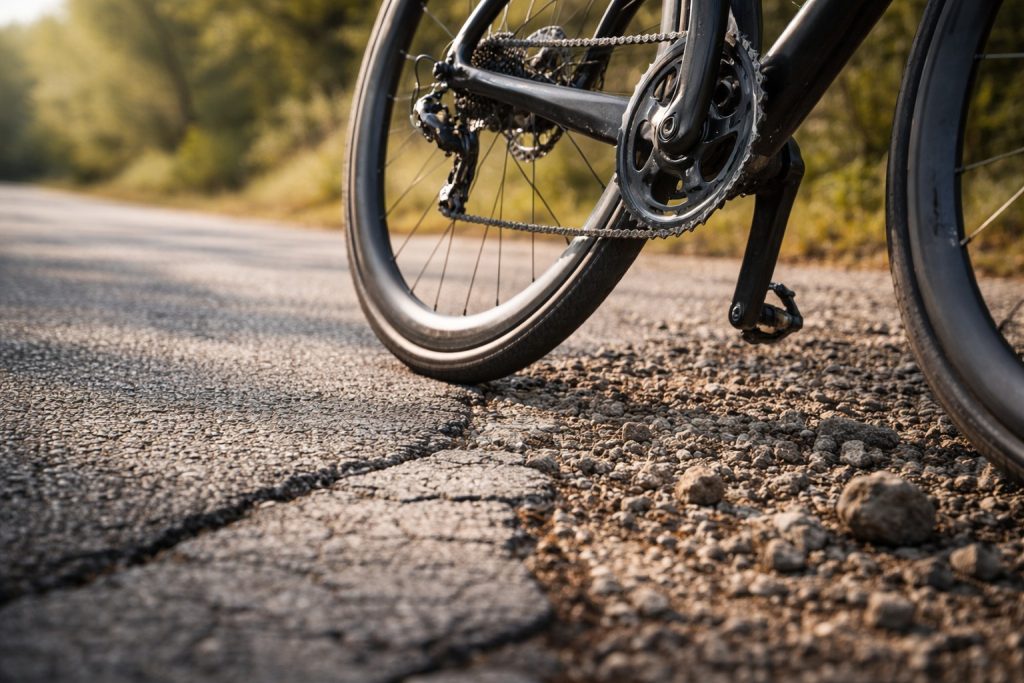
Many riders think higher pressure always equals speed. That idea comes from smooth indoor tracks or perfect pavement. Real roads are not perfect. Smooth asphalt allows slightly higher pressure. Rolling resistance stays low. Energy loss from tyre deformation stays controlled.
Rough asphalt tells a different story. Very high pressure causes the tyre to bounce over small bumps. That reduces grip and wastes energy. The bike vibrates more. Fatigue builds faster. Lowering pressure a few PSI on rough roads can increase comfort and maintain better traction. The tyre absorbs small surface changes instead of skipping over them.
Gravel or broken pavement requires even more adjustment. Road tyres are not gravel tyres, but surface still matters. If you ride mixed terrain, pressure should reflect that reality.
If you want a detailed breakdown of how different road and trail surfaces affect PSI adjustments, read our Tire Pressure Guide for Different Road and Trail Surfaces.
Surface also affects cornering. Too much pressure on rough bends reduces grip. Too little pressure on smooth high speed corners can feel vague. The goal is balance, not maximum firmness.
Quick Reference Pressure Table (Starting Points Only)
Use this table as a rough starting zone. Adjust based on feel and safety limits printed on your tyre.
| Rider Weight | 25 mm | 28 mm | 32 mm |
|---|---|---|---|
| 65–75 kg | 80–90 PSI | 70–80 PSI | 60–70 PSI |
| 75–85 kg | 85–95 PSI | 75–85 PSI | 65–75 PSI |
| 85–95 kg | 90–100 PSI | 80–90 PSI | 70–80 PSI |
These numbers assume normal road riding on mixed asphalt. Tubeless setups may allow slightly lower values.
Exact results vary. Use a structured method with your full setup for more accurate front and rear values.
Temperature Plays a Quiet Role
Air pressure shifts with temperature. Cold mornings often show lower PSI than afternoon checks. That does not mean your tyre suddenly leaks air. Air contracts in cooler conditions. A change of several degrees can alter pressure by noticeable amounts. Riders who inflate indoors then roll into cold weather may see a drop.
Air expands and contracts with temperature changes, so tyre pressure may rise or fall when weather shifts.
Heat increases pressure. Long descents with heavy braking can also warm rims. That raises PSI slightly. Road riding rarely sees extreme swings, but small changes add up. This is another reason pressure should not rely on memory. A system that considers temperature gives a more realistic starting point. You can then adjust one or two PSI based on feel.
Tubeless vs Tube: Not the Same Rules
Modern road setups often use tubeless tyres. Tubeless allows lower pressure without pinch flats. That improves comfort and grip. Tube setups require more caution. Very low pressure increases pinch flat risk when the tyre compresses against the rim.
Tubeless also interacts with rim type. Hooked rims and hookless rims have different safety limits. Always respect the maximum printed on the tyre and rim. Lower pressure in tubeless does not mean soft or unstable. It means controlled deformation. The tyre conforms to the road instead of resisting it.
If you change from tube to tubeless, revisit your numbers. Old habits from tube setups may not suit the new system.
Rim Width Also Changes the Equation
Modern road rims are wider than older models. A wider rim supports the tyre sidewall more effectively.
Narrow Rim Behavior
Narrow rims create a rounder tyre shape. Higher pressure may feel necessary to avoid instability during hard cornering.
Wider Rim Behavior
Wider rims create a more stable tyre profile. Riders can often reduce pressure slightly without losing support. Rim width does not demand extreme changes. Small adjustments of 2–3 PSI often make enough difference.
Front and Rear Should Not Match
Some riders inflate both tyres to the same PSI. That feels simple. It is rarely optimal. The rear wheel carries more load. It needs more support. The front benefits from slightly lower pressure to increase grip and control in corners.
The difference does not need to be large. A few PSI often make enough change. That small split improves stability and handling. Weight distribution can shift with riding style. Aggressive riders who move forward during climbs may change front load slightly. Still, the rear usually remains the heavier end. Use front and rear numbers separately. Do not treat them as identical parts.
Common Pressure Mistakes That Hurt Your Ride
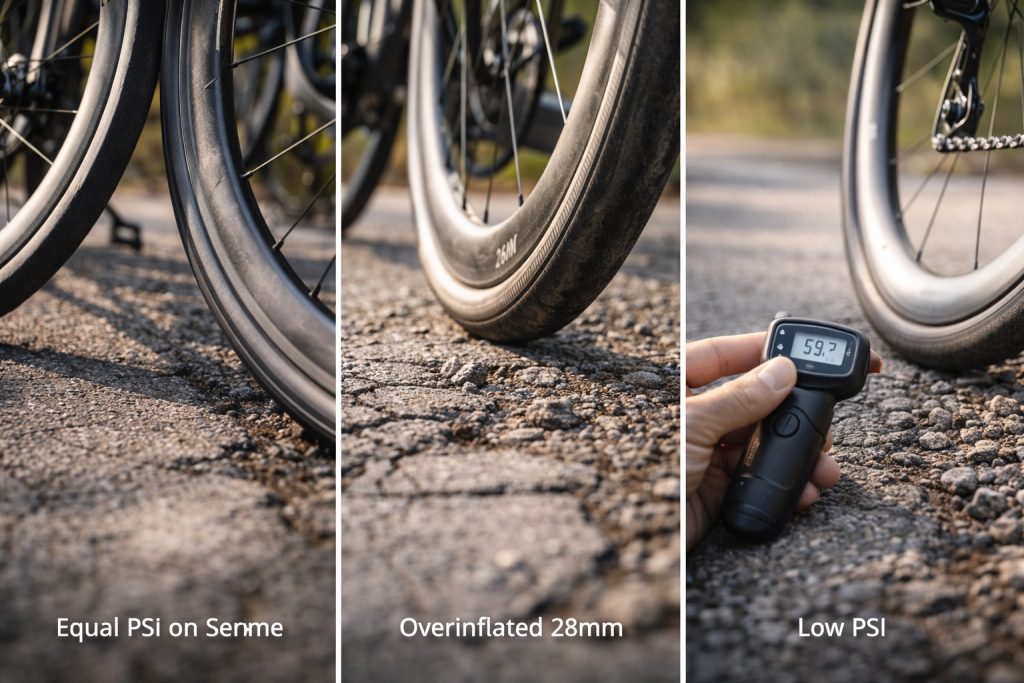
Many riders inflate tyres out of habit. That habit often creates small problems that grow over time.
Using the Same PSI Front and Rear
Rear wheels carry more load. Equal pressure front and rear can reduce grip in corners. Front tyre needs slightly less pressure for better control.
Overinflating Wide Tyres
Wider tyres need lower pressure. Riders often move from 25 mm to 28 mm but keep the same PSI. The bike then feels harsh and unstable on rough roads.
Ignoring Road Surface
Pressure that feels good on smooth asphalt may feel harsh on broken pavement. Surface matters more than many expect.
Forgetting to Check Before a Ride
Tyres lose air over time. Even small air loss changes ride feel. A quick check before long rides prevents surprises.
Comfort and Speed Are Not Opposites
Many riders chase speed through firmness. They believe harder tyres always roll faster. Real road conditions challenge that idea. Excess pressure increases vibration. Your body absorbs that vibration. Muscles tense. Energy loss increases.
A balanced setup allows the tyre to smooth small bumps. That reduces wasted motion. Comfort improves. Control improves. Speed often stays consistent. Professional teams test pressure carefully for each race stage. They do not inflate blindly to the highest safe PSI.
A Practical Way to Find Your Number
Start with total system weight. Add your typical gear and water. Choose your actual tyre width, not what the box claims. Select the surface you ride most often. Use a structured approach rather than copying numbers from forums. Calculate a realistic baseline using your current setup. Then test on the road.
Adjust in small steps. Two PSI can change feel clearly. Take notes. Notice grip, cornering, and comfort. You can calculate front and rear pressure with your full setup instead of guessing. That reduces trial and error.
Best Bike Tire Pressure Calculator in 2026
Example Setup Entered in the Calculator
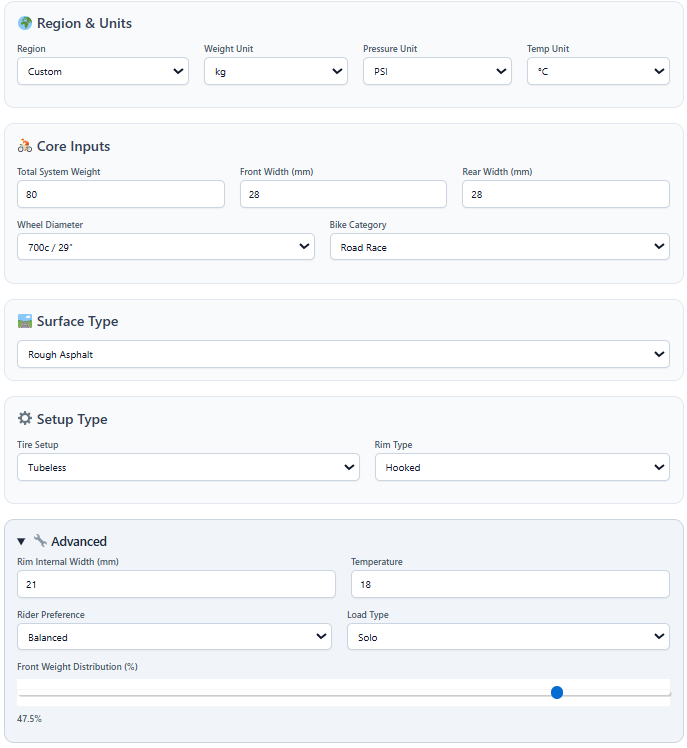
A Real-World Setup Example
Let us take a simple case.
- Rider weight: 80 kg
- Tyre width: 28 mm
- Surface: Rough asphalt
- Setup: Tubeless
The rear tyre carries more load. The rear may sit close to 60 PSI. The front may sit a few PSI lower. The front may sit slightly lower to improve grip and comfort.
Calculated Front and Rear Pressure Result
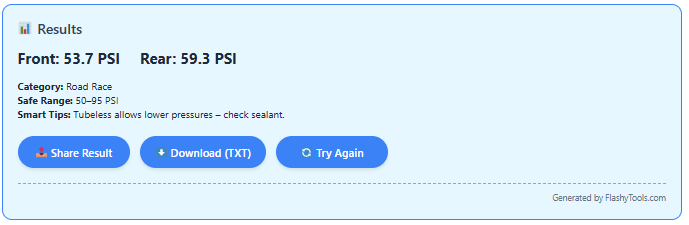
If the same rider switches to smooth tarmac, pressure may increase a few PSI. If the rider changes to 32 mm tyres, pressure drops further. Even small PSI shifts change how the bike feels on the road. That is why setup matters more than copying numbers from other riders.
Safe Limits Still Matter
Every tyre and rim has a maximum pressure printed on it. Respect that number. It exists for safety. Do not exceed the limit even if you prefer a firmer feel. Equipment failure at speed carries risk. Lower pressure also has limits. Too soft increases rim strike risk and unstable handling. Stay within reasonable zones based on width and load.
How to Test and Refine Your Ideal Pressure
Numbers on paper give a starting point. Road feedback completes the process.
Step 1: Start With a Baseline
Use your weight, tyre width, and surface type. Inflate both tyres to calculated values.
Step 2: Ride a Known Route
Choose a route you ride often. Notice comfort, grip, and corner feel.
Step 3: Adjust in Small Steps
Change pressure by 2 PSI at a time. Test again. Large jumps hide useful feedback.
Step 4: Lock in What Feels Stable
When the bike feels controlled, stable in corners, and smooth over rough sections, note the numbers.
Pressure is personal. Small refinement creates large improvement over long rides.
When to Recheck Pressure
Check pressure before long rides. Check after major temperature shifts. Check when you change tyres, rims, or riding load. Small routine checks prevent surprises on the road. Tyres lose air gradually over time. That is normal. Pressure is not a one time decision. It adapts to conditions.
Read More: Silca vs SRAM Tire Pressure Calculator: Real-World Accuracy Test
Frequently Asked Questions
Is higher tyre pressure always faster?
Not always. Very high pressure can reduce comfort and grip on rough roads. Balanced pressure often performs better in real conditions.
How often should I check tyre pressure?
Check before long rides. Check after major temperature shifts. Weekly checks help maintain consistent feel.
Should I lower pressure in cold weather?
Cold air reduces PSI slightly. Riders may need minor adjustments depending on riding conditions.
Can I use the same pressure for every ride?
Surface, load, and weather change ride feel. Small adjustments improve control and comfort.
Guessing rarely gives consistent results. Every rider setup is different. Enter your weight, tyre width, and surface in the tyre pressure calculator to get a realistic starting point.
Pingback: How Rider Weight Changes Road Bike Tyre Pressure
Pingback: Tire Pressure Guide for Different Road and Trail Surfaces